 Vík Northern Lights
What to Wear for the Northern Lights in Iceland
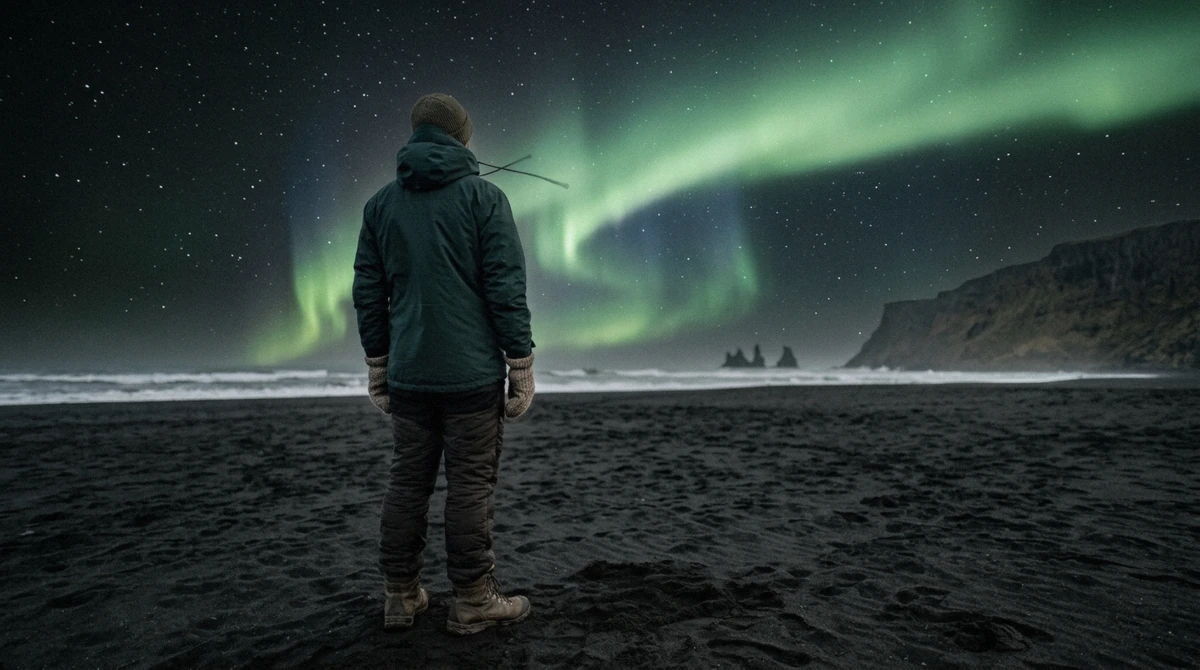
Deciding what to wear for the northern lights in Iceland starts with one number: how long you plan to stand still. None of the tours out of Vík hand out clothing for aurora watching, so the layering is entirely on you, and it has to survive one to three hours on an open beach or hillside rather than a brisk walk. Coastal south Iceland runs about -3°C to +5°C through the season and Vík averages around 4°C by day in December, but the thermometer is the smaller half of the problem. Wind coming off the Atlantic is what sends people back to the car after fifteen minutes, and a night under the northern lights in Vík is worth dressing for properly.
Quick answer
Nothing you book on this coast supplies clothing for aurora watching, so a proper three-layer system is the whole answer: a synthetic or wool base layer, an insulating mid layer, and a windproof, waterproof outer shell, plus gloves you can still operate a phone in and boots with real tread. Vík runs about -3°C to +5°C in winter and averages roughly 4°C by day in December, but those numbers matter less than the fact that you'll be standing still on an open beach for one to three hours, which is colder than walking at the same reading. Jeans and sneakers are the two mistakes that end an aurora night early.
Key takeaways
- No aurora tour on this coast provides clothing; the Katla ice cave tour provides only a helmet and crampons
- The three-layer system (base, insulation, waterproof shell) is the whole packing answer for standing still in the wind
- Skip jeans entirely; cotton and denim hold water and stop insulating the moment they get damp
- Vík averages around 4°C by day in December, but wind chill on an open beach decides the night, not that number
- Boots with tread beat trainers for the walk to Víkurfjara or the church hill
- The Sólheimajökull hike makes boots with ankle support mandatory and supplies the technical gear on top
Tours Worth Packing For
Two tours on this coast hand out real gear beyond clothing, and knowing what's included before you pack saves you from carrying equipment you'll never use.
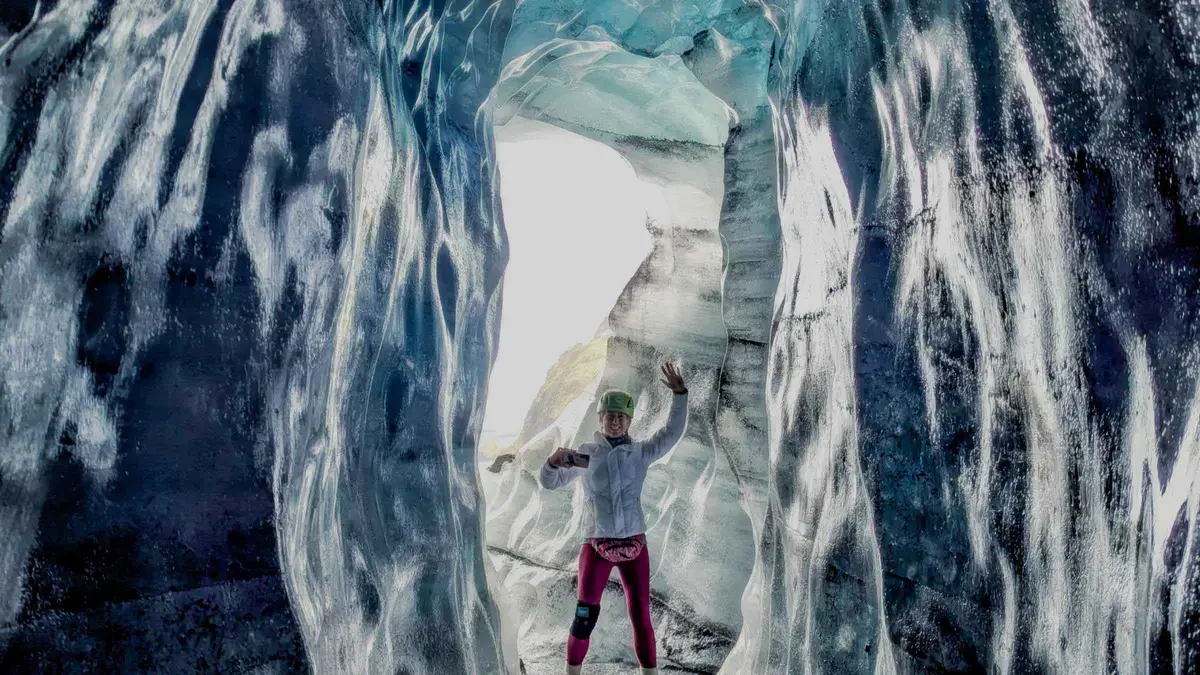
Katla Ice Cave Small-Group Tour from Vík
Three daylight hours that start and end in Vík, so your evening stays free for the beach. An hour by Super Jeep each way, roughly 30 minutes inside the cave, helmets and crampons provided. Reviewers rate the guides highly and several note the cave is smaller than the photos suggest.
- Cancellation
- Free cancellation 24h
- Operator
- Gravel Travel
 from $106.34
Best reviewed
from $106.34
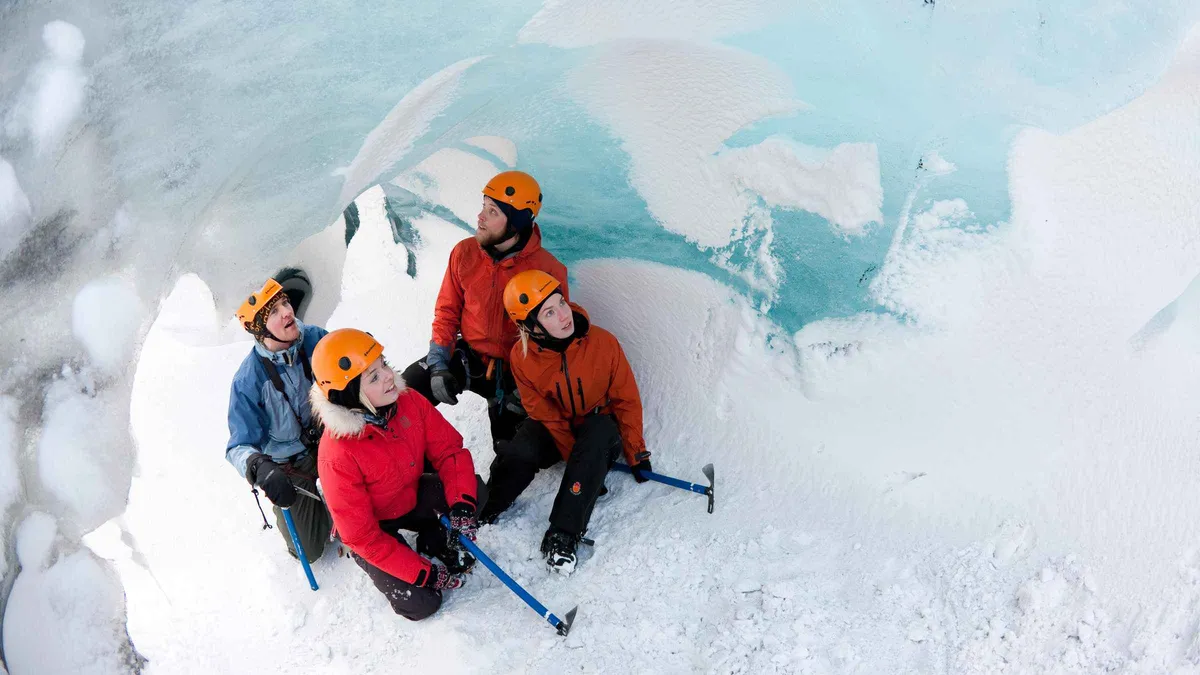
Best reviewed Sólheimajökull Blue Ice Glacier Hike
The classic south coast glacier walk, 30 minutes west of Vík and rated 4.7 from more than 1,400 reviews. Certified guides supply crampons, harness, helmet and axe, the grade is easy to moderate at roughly 6 km over 4 hours, and you meet at the glacier car park off the Ring Road. Sturdy boots with ankle support are mandatory.
- Blue ice, crevasses and moulins on the glacier 30 minutes west of Vík
- Crampons, harness, helmet and ice axe provided by certified guides
- Graded easy to moderate: about 6 km over 4 hours on the ice
- Meet at the glacier car park off the Ring Road, or add transport from Reykjavík
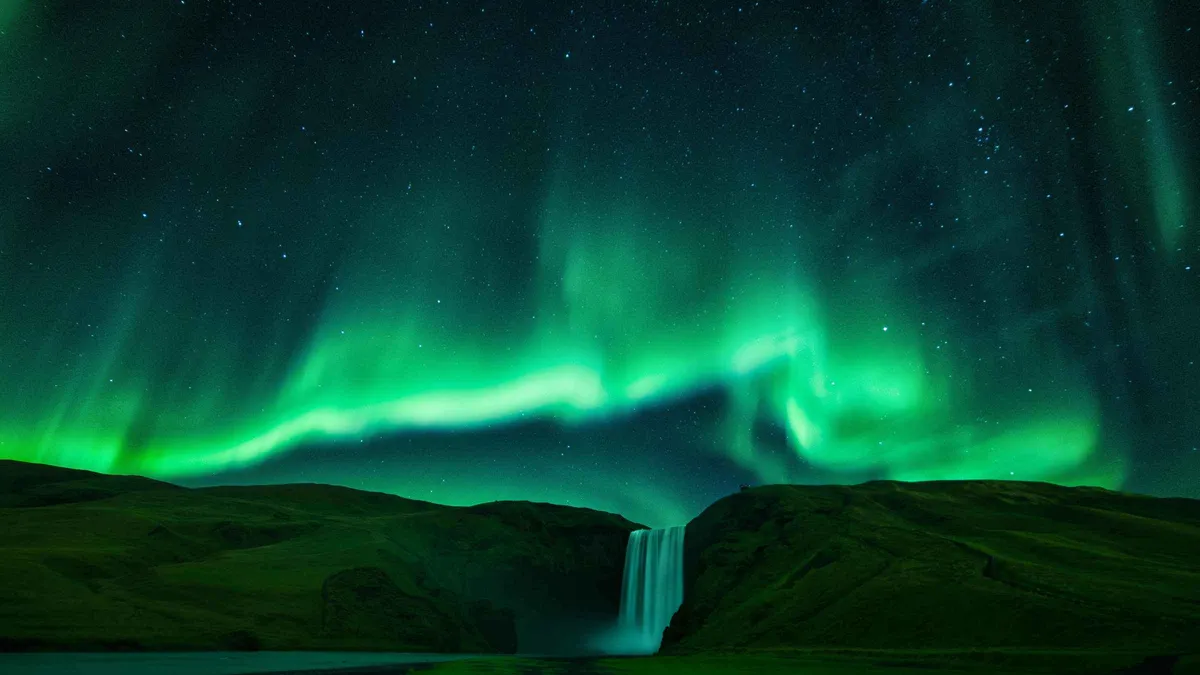
South Coast and Northern Lights Tour
Vík by daylight, aurora after dark from Reykjavík. The 13 hours split into a south coast day and a roughly 3-hour northern lights section that leaves the BSÍ terminal in the evening, so the sky you watch is over the capital region, not the black beach.
- Cancellation
- Free cancellation 24h
- Operator
- Gray Line Iceland
The Three-Layer System
Base layer: what touches your skin
A synthetic or merino wool base layer, top and bottom, does the job cotton can't. The point of a base layer isn't warmth on its own; it's moving moisture away from your skin so the layers above it can actually keep you warm. Walk from a warm car to a cold beach and you'll sweat a little even in winter, and a cotton T-shirt under a jacket holds that moisture against your skin for the rest of the night.
Merino wool or a polyester blend dries fast and keeps working even when it's slightly damp, which matters more here than in a dry, cold climate because Vík is wetter and windier than Reykjavík.
Mid layer: the insulation
A fleece or a light down jacket goes over the base layer. This is the layer that actually traps warm air, and it's the one most visitors underpack, assuming a single jacket will cover both the mid layer and the outer shell. It won't, not for standing still.
If you're driving the Ring Road by day and only stepping out for photos, a fleece is enough; if you're committing to an hour or more on the beach after dark, pack a packable down layer as well and wear both.
Outer shell: windproof and waterproof
A proper waterproof, windproof shell is the layer that separates a comfortable aurora night from a short one. Vík sits on an exposed stretch of coast where wind off the North Atlantic cuts through anything less, and a fashion jacket rated for city winters won't hold up on the beach or the church hill. Look for a shell with a hood that stays up in wind, not one that needs a hand to hold it in place, since your hands will be busy with a phone or a camera.
Legs, head and feet
Thermal leggings under waterproof or windproof trousers cover the bottom half the same way the three-layer system covers the top. A warm hat that covers the ears matters more than most people expect; heat loss through an uncovered head is real, and an hour of standing still in a beanie versus bare-headed is a noticeably different night. Wool or synthetic hiking socks, not cotton, finish the layering system from the ground up.
The three layers at a glance
Read the right-hand column first. It is the reason each layer is on the list, and it is what separates a comfortable two hours on the sand from a retreat to the car after fifteen minutes.
| Layer | What works | What fails | Why it matters here |
|---|---|---|---|
| Base | Merino wool or synthetic long sleeve and leggings | Cotton t-shirt, cotton socks | Cotton holds sweat against your skin and stops insulating once damp |
| Mid | Fleece or a light down jacket | A thin hoodie on its own | This is the layer that traps the air keeping you warm while you stand still |
| Shell | Windproof and waterproof jacket and overtrousers | A padded coat with no wind rating | Coastal wind strips warmth faster than the air temperature suggests |
| Legs | Thermal leggings under waterproof trousers | Jeans | Denim soaks up spray and drizzle and dries slowly |
| Feet | Waterproof boots with grip and wool socks | Trainers, thin cotton socks | The beach is wet sand and the church path ices over |
| Hands and head | Wool hat, liner gloves under an outer pair | One thick pair you must remove to use a phone | Bare hands on a camera last minutes in the wind |
Packing Checklist
The full list, screenshot before you leave the hotel
This covers a night of aurora watching plus the daytime activities most visitors pair it with.
- Waterproof, windproof outer shell, the single most important item on this list
- Insulating mid layer (fleece or packable down), worn under the shell
- Merino wool or synthetic base layer, top and bottom, never cotton
- Thermal leggings under waterproof trousers for the legs
- Warm hat covering the ears, heat loss through the head adds up fast standing still
- Gloves you can still operate a phone in, or a thin liner glove under a mitten
- Wool or synthetic hiking socks, a spare pair if your boots aren't fully waterproof
- Waterproof boots with real tread, for the gravel car park at Víkurfjara and the icy path up the church hill
- Headlamp or phone flashlight for the walk to and from a dark spot
- Power bank, cold drains phone batteries fast and you'll want the camera working
- Hand warmers, the cheap chemical kind, for a beach stay past the one-hour mark
- A thermos of something hot if you're staying out past an hour
What Vík Tours Provide (So You Don't Overpack)
Reading the actual listings, not a generic packing blog
Clothing and cold-weather gear are on you for every tour on this coast; what varies is the technical equipment tied to the activity itself.
| Item | Usually Provided | Bring Your Own | Notes |
|---|---|---|---|
| Warm clothing (layers, gloves, hat) | No, on every listing | Yes, always | No tour on this coast, aurora or daytime, supplies clothing |
| Helmet | Yes, on the Katla ice cave tour | No, for that tour | The Katla ice cave tour provides a helmet and crampons only, nothing else |
| Crampons | Yes, on Katla and Sólheimajökull | No, for those two | Both the ice cave and the glacier hike fit crampons to your own boots |
| Hiking boots | No | Yes, mandatory for both glacier tours | The Katla tour requires hiking shoes; the Sólheimajökull hike makes boots with ankle support mandatory |
| Harness, helmet, ice axe | Yes, on Sólheimajökull only | No, for that tour | Technical gear beyond crampons is supplied only on the Sólheimajökull glacier hike |
| Headlamp | No, on any listing | Recommended | Useful for the walk to and from a dark spot after dinner |
| Blanket or seat warmth | Varies, coach tours only | Not needed if provided | The 13-hour south coast day runs a heated coach with USB charging |
| Wi-Fi on board | Yes, on the coach and Super Jeep tours | No | Both the South Coast and northern lights tour and the Katla ice cave small-group tour from Vík list free Wi-Fi |
| Food and drinks | No, on the south coast day | Yes | Snacks and drinks are explicitly not included on the coach tour |
| Hotel pickup | Optional, at booking | Arrange separately if skipped | Available on the south coast and multi-day tours, not automatic |
Jeans, Sneakers and the Two Classic Mistakes
Why jeans fail here
Jeans are the single most common regret on a cold aurora night. Denim is cotton, and cotton holds water rather than wicking it away, so once jeans pick up dew from wet grass or spray off the sea they stop insulating entirely and stay cold against your skin for the rest of the night. They're also stiff enough to restrict movement once they're damp and cold, which matters if you're walking a gravel car park or an icy path up to the church hill in the dark.
Thermal leggings under a pair of waterproof or windproof trousers do everything jeans can't.
Why sneakers fail here
Regular sneakers or trainers work fine for a daytime walk through the village, but they're the wrong choice for the two situations that matter most: standing on wet gravel or sand at Víkurfjara for an hour, and climbing the icy path up to the church hill in winter. Neither is waterproof, and neither has the tread for ice. A pair of waterproof boots with real grip covers both dark spots inside the village without needing to switch footwear between them.
What actually works
Waterproof boots, thermal leggings under waterproof trousers, and the three-layer system above cover every dark spot in Vík, from the five-to-ten-minute walk to the beach to the ten-minute climb to the church hill. None of it needs to be specialist mountaineering gear; a solid winter hiking setup is enough for standing on flat or gently sloped ground.
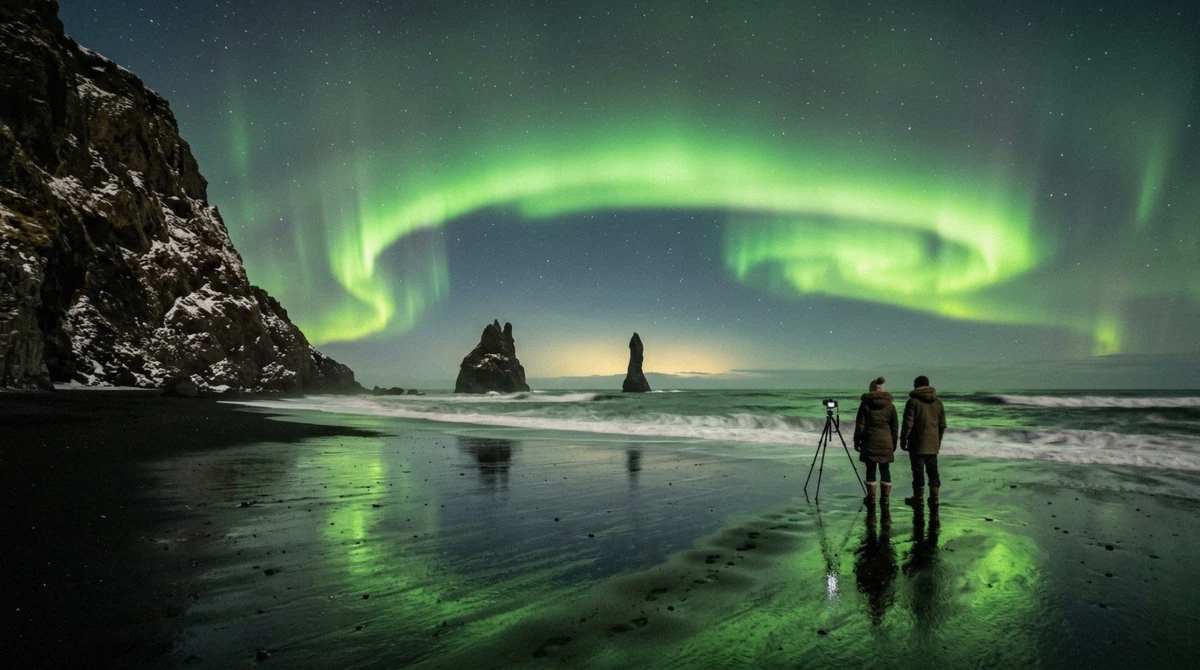
Standing Still Is the Problem
Why the same temperature feels colder here
Walking generates heat; standing still on a beach waiting for a display doesn't. Aurora watching typically means one to three hours in one spot, checking the sky and the forecast, which is a fundamentally different activity from a brisk coastal walk at the same reading on the thermometer. This is the single biggest reason visitors underdress for an aurora night even after checking the temperature and deciding it isn't that cold.
A night that reads 2°C on an app can feel considerably colder by the second hour of standing on wet sand in a coastal wind.
Hands and your phone
Bare hands last only a few minutes in a coastal wind before they're too numb to operate a phone screen, which is a real problem if you're using an app to check the forecast or trying to photograph the display. Touchscreen-compatible gloves solve the operating problem; a thin liner glove under a warmer mitten solves the warmth problem when you need to pull a hand free briefly. Phone battery life also drains fast in the cold, sometimes dropping ten or twenty percent faster than it would indoors, so keeping the phone in an inside pocket between checks and carrying a power bank covers both problems at once.
Managing a long wait
The tours here don't run an evening departure from Vík itself, so anyone watching from the village is managing their own wait rather than following a tour schedule. Cheap chemical hand warmers tucked into gloves or boots stretch a comfortable watch well past the one-hour mark, and a thermos makes the difference between checking the sky every twenty minutes from a warm spot and standing outside the entire time. Picking somewhere to stay close to a dark spot shortens the walk between the warm indoors and the beach or church hill, which matters more than any single item on the packing list.
None of this changes what to wear underneath, but it changes how long you can comfortably wear it.
Packing Questions
What should you wear to see the northern lights in Iceland?
A three-layer system: a synthetic or merino wool base layer, an insulating fleece or down mid layer, and a waterproof, windproof outer shell, plus thermal leggings under waterproof trousers, a warm hat, touchscreen gloves and waterproof boots with real tread. No tour on this coast supplies any of it.
Can you wear jeans in Iceland?
Not for an aurora night. Jeans are cotton, and cotton holds water and stops insulating once it's damp, which happens fast on wet grass or sea spray. Thermal leggings under waterproof or windproof trousers do the job jeans can't.
Can you wear sneakers in Iceland?
For a daytime walk through the village, yes. For standing at Víkurfjara or climbing the icy path to the church hill after dark, no; regular sneakers aren't waterproof and lack the tread for ice. Waterproof boots cover both.
What do tours provide and what must you bring?
Clothing is on you for every tour on this coast. The Katla ice cave tour provides a helmet and crampons and requires hiking shoes; the Sólheimajökull glacier hike provides crampons, harness, helmet and ice axe and makes boots with ankle support mandatory. Neither hands out warm layers.
How cold does it actually get standing still?
Coastal south Iceland runs about -3°C to +5°C in winter, with Vík averaging around 4°C by day in December, but wind chill decides how a night on the beach actually feels rather than that number alone. Standing still for one to three hours reads considerably colder than walking at the same temperature.
What do you need for your hands and your phone?
Touchscreen-compatible gloves so you can check the forecast and use your camera without exposing bare skin, and a power bank since cold drains phone batteries faster than usual. Keeping the phone in an inside pocket between checks helps too.
Do I need special gear for the church hill or the beach?
No technical gear, just the standard layering system and waterproof boots with grip. The church hill path can ice over in winter, which is the main reason boots beat sneakers for either dark spot.
Where should you stay so you can go back for a warmer layer?
Anywhere in the village. From most of the accommodation compared in our guide to where to stay in Vík, the beach is a five to ten minute walk, so a mistimed layer costs you fifteen minutes rather than the night. The Katla ice cave tour also meets in the village, which is why it works as a daytime filler between aurora nights.